
Beginner workout plan for women at home
Published 2026-11-03 · Updated 2026-11-03
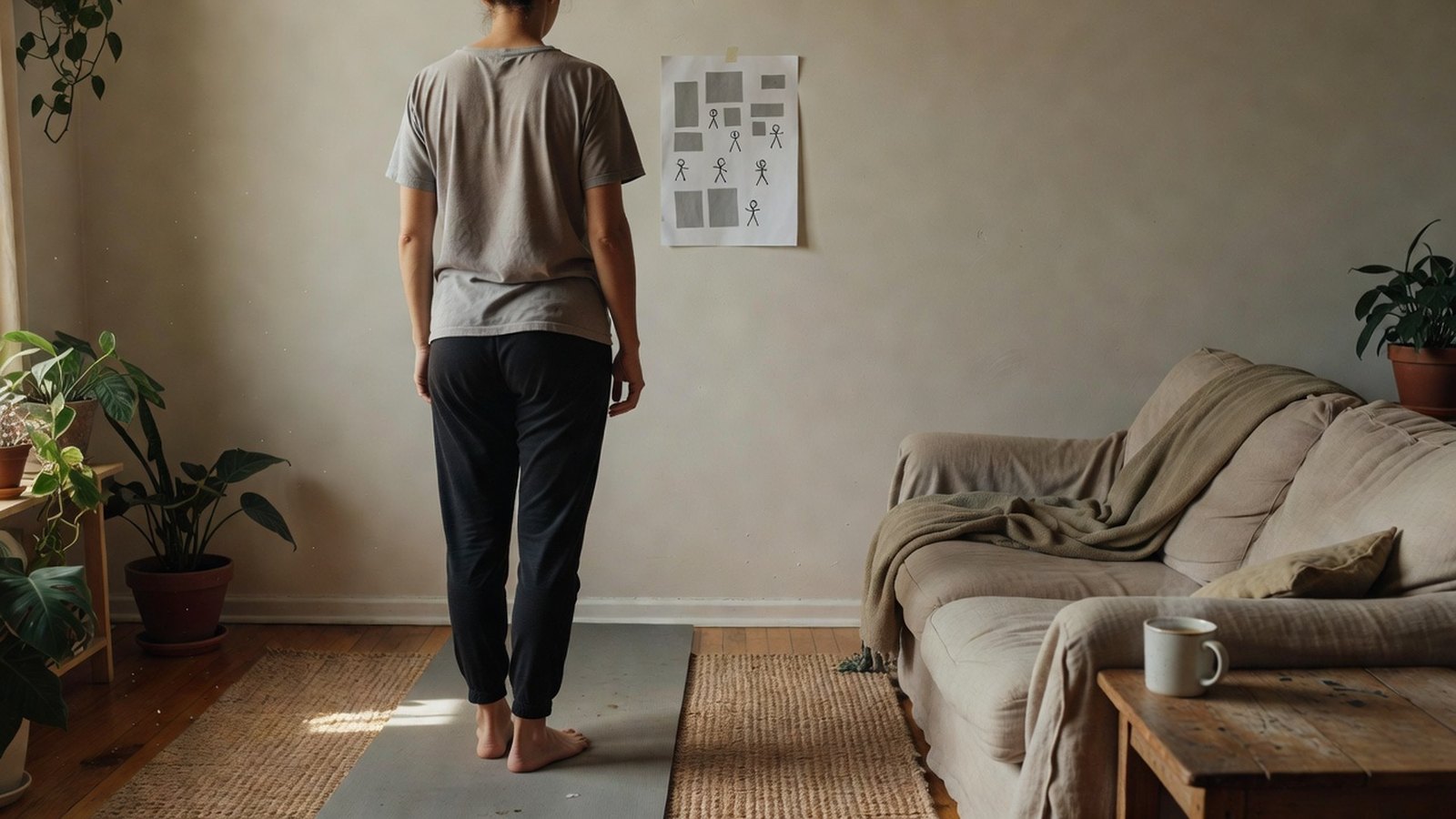
Start with three home sessions a week, on days you can keep, and rest a day between them if you can. Tape today's session where you can see it, do the moves in order, and finish with a little energy left. The public target is at least 150 minutes of moderate-intensity physical activity a week, such as 30 minutes a day, 5 days a week, plus 2 days of muscle-strengthening activity each week. You can build toward that total. Some physical activity is better than none.
Check with your doctor before you start, and stop if a move hurts; Mayo Clinic says to stop a strength exercise that causes pain.
The first weeks, answered
A beginner week at home is three strength sessions, plus ordinary movement on other days. Brisk walking counts as moderate-intensity aerobic activity in the CDC adult example of 150 minutes a week. Muscle-strengthening is asked for on 2 or more days a week and should work the legs, hips, back, abdomen, chest, shoulders, and arms. Three full-body sessions can cover those strengthening days if each one touches those groups. Walking on the other days helps the minute total.
Keep the sessions short enough that you will start. Mayo Clinic notes that strength work at least two times a week, for about 20 to 30 minutes each time, is enough for many people to feel stronger. That is a floor for strengthening, not a demand to fill the evening.
The same week, repeated, is the plan. Change the days if your week changes. Do not invent a new list of moves every Monday. A repeated list is easier to follow, and you can see what you already did.
A month on the wall
The free starter is a printed sample of a first month at home. Its session names repeat in this order: Legs and core, then Upper body and back, then Whole body. Print the letter starter or the A4 starter, tape up today's page, and do those three first. The rest of that month sheet uses the same three names again. That rotation is the home plan: each session has a job, and you always know which page is next.
A squat starts standing, feet about hip-width. Sit your hips back and down as if toward a chair, then stand. Keep your heels down.
A glute bridge starts on your back, knees bent, feet flat. Press the hips up until the body is a line from shoulders to knees. Press through the heels and squeeze at the top.
An incline push-up starts with your hands on a sturdy counter or wall, body in one line from head to heels. Bend the elbows to lower the chest, then press back. Keep that line.
Each move should have an easier option. Squat down only as far as you can stand back up. Bridge only halfway. Push from the wall if the counter is too low. The harder option, such as holding a light dumbbell, waits until the plain version is steady.
If you want the moves with no equipment written as their own week, see the home plan with no equipment. If you want one short routine before you think about a month, see the simple home workout routine.
How hard, and rest
Go hard enough that the last reps are real work, and easy enough that the shape of the move stays true. Mayo Clinic says to choose a weight or resistance heavy enough to tire the muscles after about 12 to 15 repetitions. A single set of 12 to 15 repetitions can build strength for most people. With bodyweight, use the easier or harder option until the set lands near that effort. If the shape falls apart, stop the set.
Rest one full day between exercising each specific muscle group. A day between home sessions matches that. You can walk on the day between. Walking is not the same job as the strength session.
Spread the week rather than saving every minute for one long Saturday. The CDC example of 30 minutes on 5 days is one way to reach 150 minutes. Three strength sessions plus walks is another way to move toward the same weekly total. Either way, write the days down before the week starts.
If you miss a day
Missed a session? Do the next one on the list when you can. The list does not expire. Stacking two hard sessions into one evening just to catch a box on the calendar is how a week gets skipped for good. Keep the day off between strength sessions, and let the missed name wait until the next open day.
A missed walk is simpler. Take a shorter walk later, or leave it. Some physical activity is better than none, including a week that was smaller than you planned.
Write a one-line rule on the top of the page: next session, not a makeup double. You will not need to renegotiate it when you are tired.
One session, written out (illustrative)
The reps below are an example pace for a first week. They are not a test, and they are not a promise. Change them if a move feels shaky. This block is an illustration of a session shape, not a measured program.
Warm up by marching in place, then circling the arms, then hinging at the hips a few times with a flat back.
Do the round twice. Rest about a minute between rounds, and a short pause between moves.
- Squat, 10 reps. Sit back, heels down.
- Glute bridge, 10 reps. Squeeze at the top.
- Incline push-up, 8 reps. Body in one line.
- Reverse lunge, 6 each side. Step back, lower straight down, push through the front heel to stand.
- Side-lying leg raise, 8 each side. Heel leads, hips stay stacked.
Cool down with a standing thigh stretch and a hamstring stretch, one side then the other, easy breath.
If you want the same shape with the pictures already on the page, use the free starter rather than copying this illustration by hand.
A kit if you want it printed
You can follow the week on this page with a pen and a blank sheet, and buy nothing. The honest limit of that advice is that you still choose the moves, write the days, and keep the page yourself.
When you want the month already written, with pictures and a place to tick the day, the 4-Week Home Start Kit is for knowing exactly what to do at home for your first month: three sessions a week of about 20–30 minutes, every move pictured. Inside the kit: the 4-Week Home Workout Plan, the Home Workout Tracker and the No-Equipment Exercise Cards. It is an instant digital download, nothing ships, and the price is $11.49. It is print-only: you write on the pages by hand, and there is no video, no coach and no app. Dumbbells stay optional.
After the first month, the next question is how to build the week yourself. That is the guide to making a workout plan.
Questions
What is the ideal workout schedule for a woman?
Use the public adult weekly total, and build a week you can keep. Adults need at least 150 minutes of moderate-intensity activity a week, such as 30 minutes a day, 5 days a week, plus muscle-strengthening on 2 or more days that work the major muscle groups. A home schedule that is easy to follow is three strength sessions with a day between them, and easy walking on other days if you want more of those minutes. Ideal means the days fit your real week.
What is the best workout routine for a female beginner?
A good beginner routine at home is full body, easy to follow, and done at your own pace. Three sessions a week is a sound start: a squat or a sit-to-stand, a push, a hip bridge or hinge, and a back or core move, with an easier option while you learn. Print the free starter and tape today's session on the wall. There is no routine that fits every house, so keep the one you will actually do.
How to start a workout plan for beginners?
Check with your doctor before you start. Pick three days you can keep, learn a few full-body moves, and do one set with control. Rest a day between sessions. If you miss a day, do the next session when you can. Write the week down so today's session is decided before you roll out the mat.
From the shop
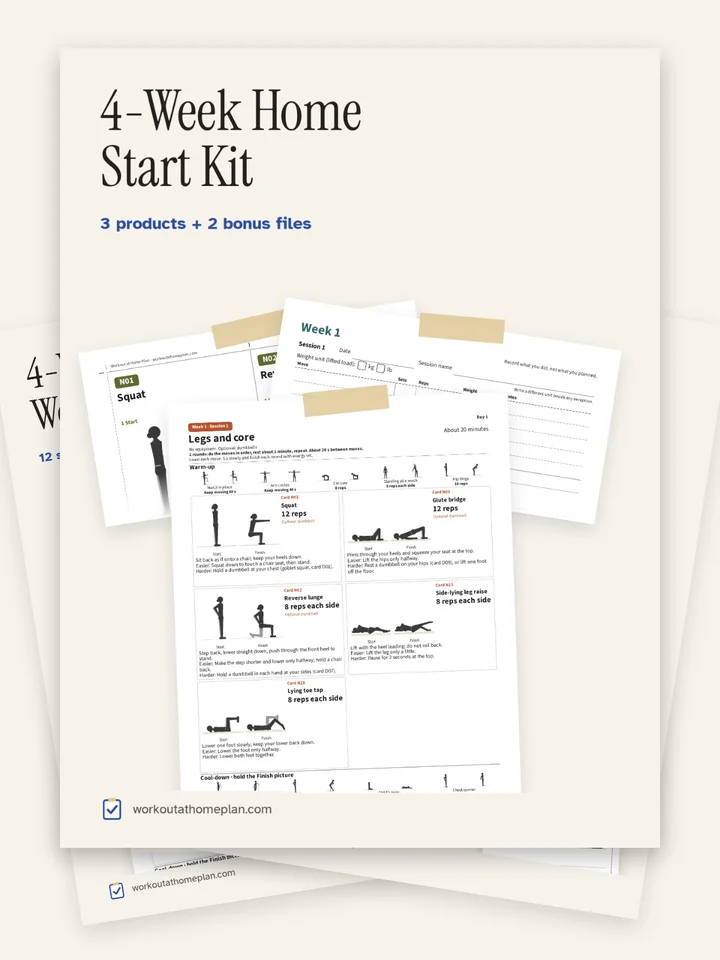
4-Week Home Start Kit
Your first month at home, planned day by day, with every move shown.
- 4-Week Home Workout Plan$8.99 on its own
- Home Workout Tracker$4.99 on its own
- No-Equipment Exercise Cards$6.50 on its own
- 2 bonus files: quick start, 4-week wall calendar
Price: $11.49
The three products bought one by one on this shop: $20.48. You save $8.99
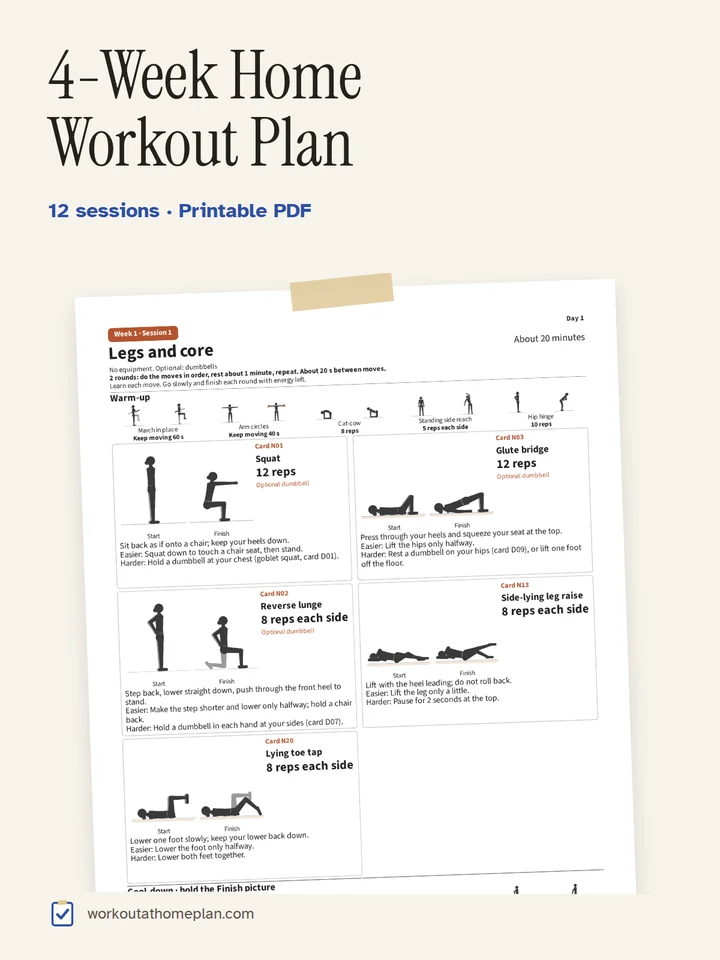
4-Week Home Workout Plan
Know exactly what to do at home for your first month: three sessions a week of about 20–30 minutes, every move pictured.
- 4 weeks
- 3 sessions a week
- about 20–30 min
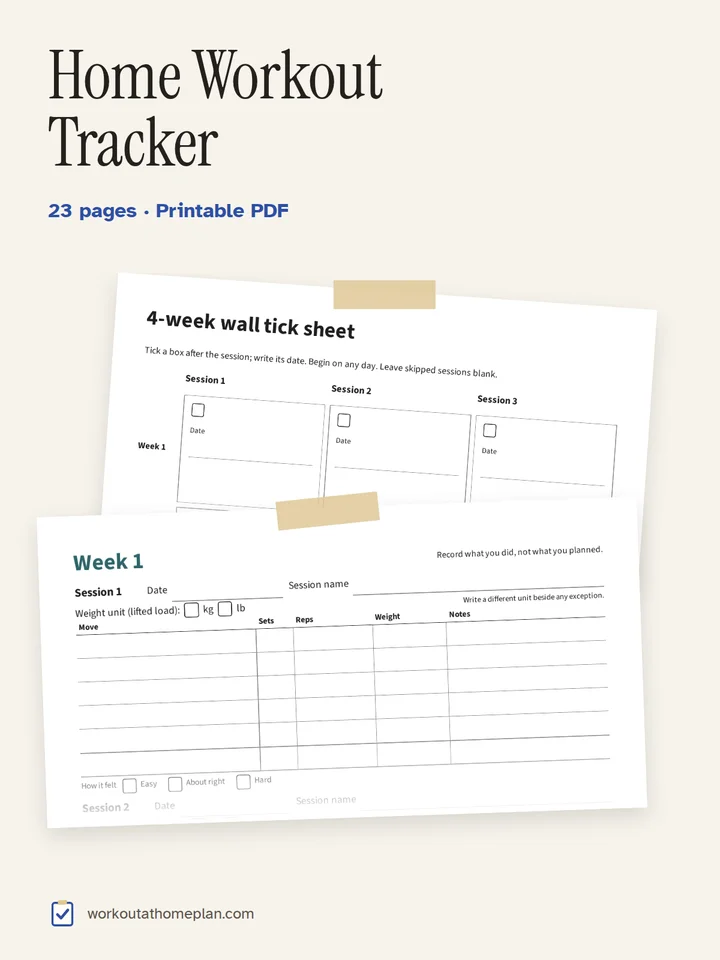
Home Workout Tracker
Write down every home workout you do, ours or your own, and see where you are at a glance.
- 16 week pages
- print and write